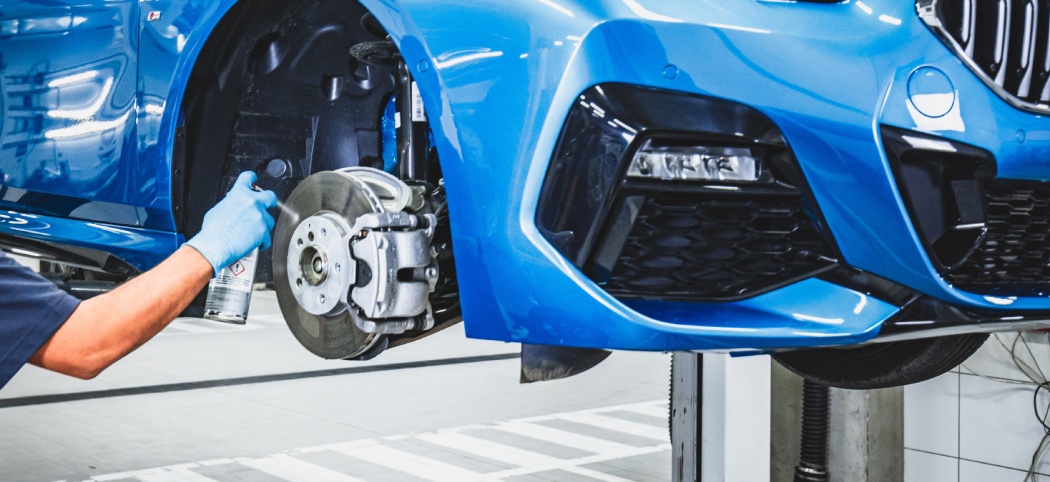
OEM vs. Aftermarket Brake Pads: What Drivers near Mount Holly, NJ Should Know
Brake pads are small parts with big responsibility — they translate pedal pressure into safe, predictable stopping power. Choosing between OEM and aftermarket pads starts with understanding how each is engineered. OEM pads are built to the vehicle’s original specs for friction, heat tolerance, noise control, and pedal feel, then tested with the exact rotors, calipers, and electronic stability systems your car uses. Aftermarket pads range from economy formulations to premium ceramics, offering choices in dust, noise, and longevity, but they may alter pedal feel or rotor wear depending on the match. For daily commutes and family trips, consistency matters as much as ultimate bite. Drivers near Mount Holly, NJ contend with frequent stops, short hops, and highway merges, which can magnify differences in pad materials and noise control. That is why material quality, hardware fitment, and proper installation make a noticeable difference in everyday confidence. At Cherry Hill Nissan, our factory-trained technicians evaluate your brake system as a whole — pads, rotors, hydraulics, and the electronics that manage stability and brake force — then recommend options aligned to your driving, vehicle, and maintenance goals. The right choice is the one that preserves safety, feel, and performance in the conditions you face most, and is installed with careful prep, proper lubrication, torquing, and bedding procedures to unlock full potential.
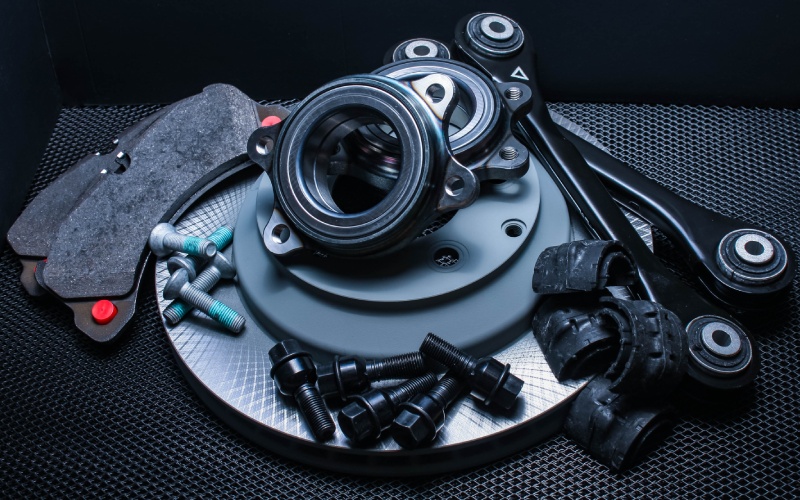
OEM vs. Aftermarket: Materials, Performance, and Longevity
- OEM pad match: Tuned for your vehicle’s brake bias, ABS and stability control, and rotor metallurgy
- Aftermarket variety: Wider range of friction formulas from economy to premium ceramic or performance blends
- Noise and vibration: OEM pads often include engineered shims and chamfers that minimize squeal at everyday speeds
- Pedal feel: OEM pads aim for smooth, linear response — aftermarket can feel more aggressive or softer depending on formula
- Heat management: Semi-metallic pads tolerate higher temps; ceramics run quieter and cleaner but can change initial bite
- Dust and rotor wear: Ceramics typically dust less; some semi-metallics trade dust for stronger cold and hot stopping
- Compliance: Quality options meet federal brake standards and carry SAE friction codes stamped on the backing plate
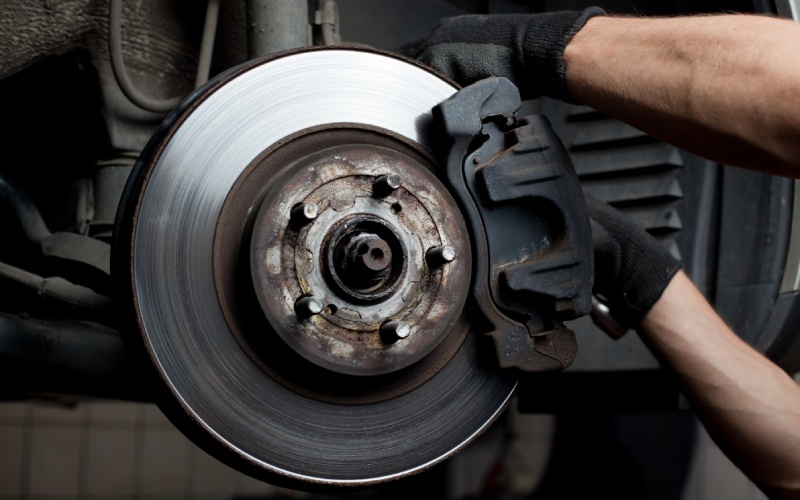
Think of pad choice as a balance of feel, noise, dust, and longevity. OEM pads target the middle ground — quiet, consistent, and predictable with the vehicle’s original rotors. Aftermarket pads can excel in a specific lane, like low dust or higher fade resistance, yet the trade-off might be increased rotor wear, more noise at low speed, or different pedal feedback. If you spend most miles in stop-and-go on NJ-38 or merge frequently onto I-295, smooth initial bite, low-speed silence, and low dust may rank highest. If you tow or carry heavy loads, semi-metallic heat capacity can help. The smartest approach is to choose the friction that matches your use case and budget — and pair it with the correct rotor type, hardware, and a professional installation that includes bedding to stabilize friction and reduce noise.
How Fitment, Calibration, and Brake System Health Affect Your Choice
Even the best pad underperforms if the rest of the system is not healthy. Exact pad shape, shim design, and hardware tension affect how evenly the pad meets the rotor, which governs stopping feel and noise. Your car’s ABS, EBD, and stability controls were tuned around a specific friction range; jump far outside it and the pedal may feel different under hard stops or on uneven pavement. Rotors matter, too — material, thickness, and surface finish must complement the pad. During service, our team measures pad thickness, rotor thickness and runout, checks caliper slide movement, inspects hoses, and verifies the master cylinder and brake booster condition. We also test brake fluid for moisture because old fluid lowers boiling point and can change pedal feel during repeated stops. As a rule of thumb, many drivers replace pads between 20,000 and 60,000 miles depending on traffic and driving style. Brake fluid service is commonly due every 2 years or about 30,000 miles. Cherry Hill Nissan performs these checks during a multi-point inspection and then explains what is urgent, what can wait, and which OEM or aftermarket friction will preserve your desired pedal feel and braking distance. That way you get confidence on local streets and highways — with a setup that works with your vehicle rather than against it.
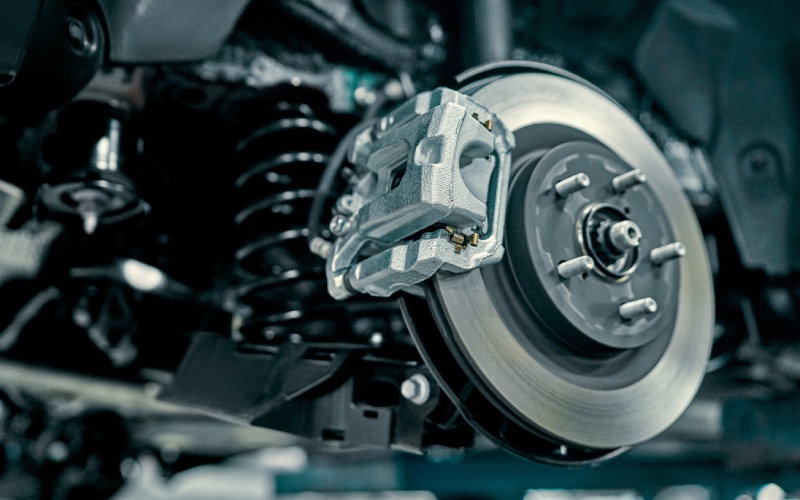
What Our Service Team Does During a Brake Visit
- Pad and rotor measurement: We micrometer pad material, rotor thickness, and record rotor runout
- Hardware and fitment: We inspect anti-rattle clips, abutment surfaces, slide pins, and replace worn hardware
- Caliper function: We check piston seals, boots, and even pad taper that signals uneven clamping
- Hydraulic health: We test brake fluid for moisture and contamination that reduce boiling point
- Rotor condition: We evaluate hot spots, glazing, or scoring to determine resurface or replace
- System checks: We verify ABS and stability lights, pedal reserve, brake booster performance
- Clean and lube: We clean mating surfaces, apply high-temp lubricant to slides and contact points
- Precision torque: We torque wheels to spec to avoid rotor distortion and future vibration
- Road test and bedding: We bed new pads to stabilize friction, then confirm noise and feel
- Digital report: We document measurements and prioritize recommendations you can review
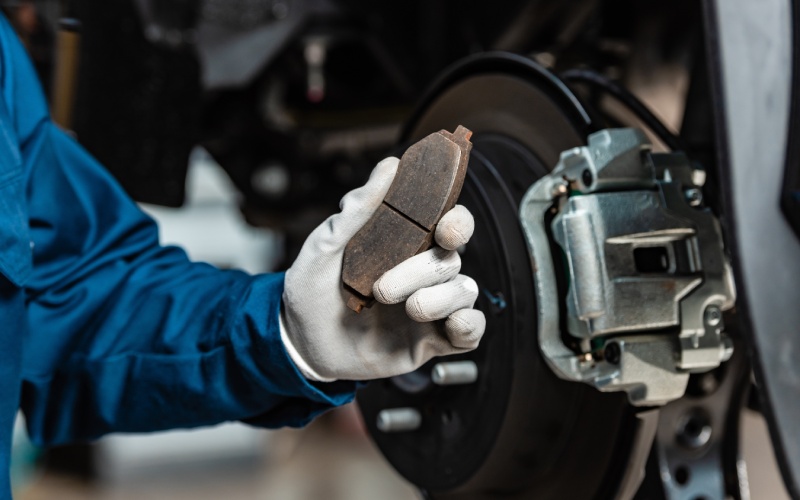
You leave with a clear picture of your options and what best suits daily driving near Mount Holly, NJ — whether that is OEM predictability or an aftermarket set that targets lower dust or higher heat tolerance. Our Express Service offers fast, convenient maintenance with a complimentary multi-point inspection, and our full-service bay handles complex brake repairs and fluid flushes. Prefer to wait onsite while we work? Enjoy our comfortable lounge with Wi-Fi and refreshments. Need to keep moving? Ask about our courtesy shuttle and available loaner vehicles with qualifying services. We service all makes and models, and we install genuine Nissan parts when you want the factory match.
Brake Pad FAQs for Daily Driving
Which is safer — OEM or aftermarket brake pads?
Both can be safe when properly matched to your vehicle and installed correctly. OEM pads are tuned to your car’s brake system and often deliver the most consistent feel and noise control. Quality aftermarket pads can perform very well when chosen to fit your use case and rotor type.
How often should I replace brake pads?
Many drivers see 20,000 to 60,000 miles, depending on traffic, hills, load, and driving style. Have pads inspected at each tire rotation, and do not ignore squeal indicators, grinding, vibration, or longer stopping distances.
Will ceramic pads stop better than semi-metallic?
Not always. Ceramics are typically quieter and dust less, while semi-metallics often offer stronger high-heat performance. The right choice depends on your priorities and driving conditions.
Do aftermarket pads void my warranty?
Using non-OEM pads does not automatically void a warranty. However, parts or installation that cause a failure may not be covered. Our service advisors can recommend options that align with manufacturer standards and your goals.
How long does a brake appointment take?
Simple pad-and-rotor jobs can be completed the same day in many cases, especially with advance scheduling. Allow additional time for rotor replacement, fluid flushes, or diagnosis of warning lights or vibrations.
Schedule Expert Brake Service and Pad Replacement Today
Your brakes work every time you drive, so choosing the right pads — and the right team — matters. Our factory-trained technicians measure before replacing, install with precision, and road test to confirm quiet, confident stops. We use genuine Nissan parts when you want the factory match, and we offer carefully vetted aftermarket options when you prioritize attributes like lower dust or higher heat capacity. Count on extended service hours, online scheduling, and Express Service for quick inspections, plus a comfortable lounge, courtesy shuttle, and available loaner vehicles with qualifying services. We also offer a complimentary multi-point inspection at every Express Service visit, so you know exactly what is healthy and what needs attention next. Ready for brake pad advice tailored to your commute and driving style? Contact Cherry Hill Nissan to book your brake inspection or pad-and-rotor service, or schedule online any time. Our service team is here to help you stop with confidence — today, tomorrow, and every mile ahead.